Who it is for
An implant comes into the picture when erectile dysfunction has not responded to medical treatment: oral medications that do not work well enough, or intracavernosal injection therapy that did not work or was not tolerated.
Situations in which it is often considered earlier: severe erectile dysfunction after prostate surgery, advanced erectile dysfunction of vascular or neurological origin, and cases of Peyronie's disease with significant curvature plus erectile dysfunction, where surgery corrects both problems.
It is not indicated for men who respond well to less invasive treatments, nor for cosmetic purposes or penis enlargement.
What the prosthesis restores, and what it replaces
The prosthesis restores the ability to have penetrative sex. Sensation, orgasm and ejaculation do not depend on the corpora cavernosa, and they are preserved. This is the most common question in the consultation, and the answer is that pleasure stays the same.
What changes
The device takes the place of the erectile tissue. If the prosthesis ever has to be removed, any remaining natural erections will not come back. It is an irreversible decision, which is why it comes after the other options, not before them.
Types
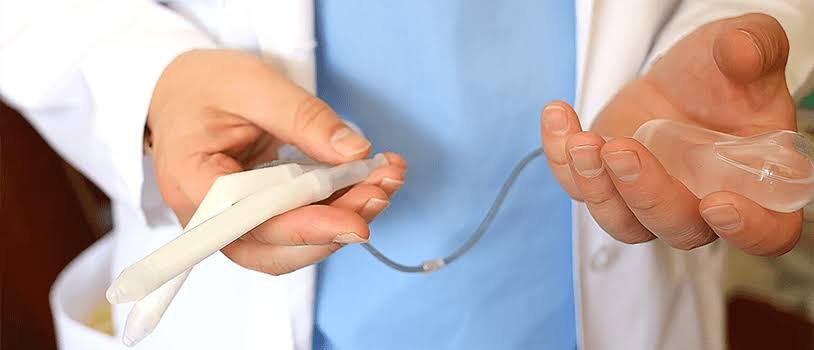
- Inflatable (three-piece)
- Cylinders in the corpora cavernosa, a pump in the scrotum and a fluid reservoir. You use the pump to get an erection and deflate the device afterward. It gives the most natural result, both in rigidity and in how the penis looks at rest. It is more complex and has more components.
- Malleable (semi-rigid)
- Flexible rods that you position by hand. Simpler, with no mechanical parts and a lower chance of mechanical failure. The penis stays firm all the time, which means some adjustment in how you wear your clothes.
The choice takes into account manual dexterity, any previous surgery in the area, your medical conditions and your own preference once you understand both options.
Surgery and recovery
The procedure is done under anesthesia, usually with a short hospital stay. Pain right after surgery is expected and is controlled with medication, and it improves steadily over the first few weeks. This surgery requires specific training, and in 2026 I completed further training in this area in the United States.
Sexual activity can usually resume after four to six weeks, once you have been cleared at a follow-up visit and, for the inflatable prosthesis, trained to use the device. The exact timing depends on how your recovery goes.
The real risks
There are three risks you need to understand before deciding, and neither surgical technique nor the device itself eliminates any of them:
- Infection
- This is the most feared complication, because it often means the device has to be removed. Current rates for first-time implants are between 1% and 3%, and they have fallen significantly with coated devices (there are antibiotic coatings and hydrophilic coatings that are prepared at the time of surgery). But the risk is not zero, and it is higher in patients with poorly controlled diabetes and in repeat operations. This is one of the topics I have published on.
- Mechanical failure
- Prostheses are devices, and they have a limited lifespan. Over the years, components can fail and need to be replaced surgically.
- Need for revision
- Besides mechanical failure, problems such as malposition, erosion or dissatisfaction with the result can occur, and these require another operation.
What the evaluation involves
The conversation before surgery is recommended is the most important part of this process. It involves confirming that previous treatments were properly tried, reviewing medical conditions that increase risk, setting realistic expectations about the result and, when possible and if you wish, including your partner in the conversation.
The initial evaluation can be done by telemedicine. A decision to operate requires an in-person exam.
Frequently asked questions
Will I still feel pleasure normally after the implant?
Yes. Penile sensation, orgasm and ejaculation do not depend on the corpora cavernosa, which is where the prosthesis is placed. These functions stay as they were before surgery.
Is the surgery very painful? How long is recovery?
There is pain in the first few days, controlled with medication, and it improves steadily over the following weeks. Sexual activity usually resumes after four to six weeks, once you have been cleared at a follow-up visit.
What if the prosthesis breaks? Can it be replaced?
Yes. Replacement is possible, and it is an anticipated procedure. Prostheses have a limited lifespan, and the possibility of revision over the years is part of the decision from the start.
Will my partner be able to tell it's a prosthesis?
When deflated, the inflatable prosthesis leaves the penis looking and feeling close to its natural resting state. The malleable type stays firm all the time, which is noticeable. Many patients prefer to talk openly with their partner about the implant, and this is often worked through during the consultation.
Can I get a prosthesis just to increase size?
No. A prosthesis is indicated to treat erectile dysfunction that has not responded to other treatments. It does not make the penis bigger. In most cases, erect length ends up slightly shorter than it was before the erectile dysfunction began.